AI Generated Job Losses


Sometimes a panel discussion just falls flat. The conversation fails to ignite, and the segment drags on until the producer puts the presenter out of their misery – “you can wrap now”!
In current affairs this happens when the guests have been handed a topic for which battle lines have yet to be drawn. There’s no row, and in that instance it is generally the producer’s fault. They had a rush of blood to the head and deviated into territory where there was no political heat or juice, no Dáil fracas to back it up with.
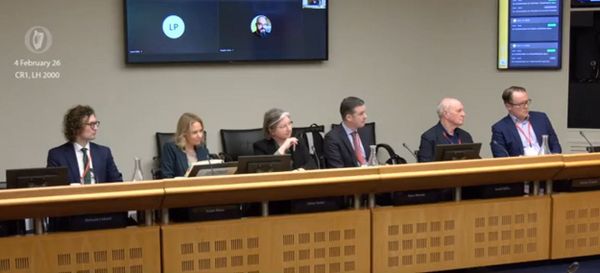
The segment in question was during last Tuesday night’s Tonight Show on Virgin Media Television, and I was the producer with an undercooked segment. We had a decent panel of guests – TDs Malcolm Byrne and Pearse Doherty, and Kate English from Deloitte Ireland – and a hook of sorts: the government had released its new Digital and AI Strategy the week before, which positioned Ireland as a “hub for AI innovation and adoption”. That same day, the Department of Finance had its own paper out warning that the Irish job market was “uniquely exposed” to AI.
See the dilemma? The Taoiseach’s office releases a 90-action strategy which would see Ireland press its advantage as an AI domicile of choice, hosting "eight of the world's leading AI model providers and sixteen of the top twenty global tech companies". Parking the data centre debate, this concentration of tech power is also a labour market vulnerability. The Department of Finance estimates Ireland will be among the first countries in the developed world to face “widespread AI-driven labour market disruption”.
We’ve heard warnings from Finance before. Their 2024 paper Artificial Intelligence: Friend or Foe? estimates that two thirds of Irish employment is exposed to AI disruption and roughly 800,000 jobs are at risk. This time they were looking at evidence of this disruption having already taking place. The picture is murky but concerning.
Let’s take the graduate level jobs. The paper found that AI-related labour market adjustments have occurred "mainly through changes in hiring and entry, rather than through the displacement of existing workers". The job postings suggest a softening. Graduate jobs advertised on Indeed.com were down around 13% year-on-year in Q3 2025.
What about existing employment among young people? The paper finds that employment among 15–29-year-olds in the 'at risk' sectoral category "declined by 1% between 2023 and 2025" even as employment continued to grow in these sectors overall. The worst faring sector was ICT:
"[ICT] employment among 15-29 year olds has fallen by over 20 per cent during this period, while it grew by 12 per cent for 'prime-age' workers (30-59 years)"
This chimes with international research showing a 16% relative decline in AI-exposed jobs among that age group. It’s not a huge figure but is evidence to point at nevertheless.
Back to our panel discussion, Deloitte Ireland’s Chief Economist Kate English insisted the Irish employment data was not clear cut:
“that analysis was done between 2023 and 2025. And when we think about it, when we think about the tech sector, it saw huge growth, a very large number of jobs added during COVID and shortly after. There is an acceptance that some of that was over hiring at the time. So, is what we're seeing now a cyclical change, a slow down within that particular sector, or is it indeed the start of AI disruption? I firmly believe over time, AI is going to change our labour market, but is it evident or the root cause of the slow down in our labour market right this moment? I'm not so convinced.”
In her view the data is too granular but there will be disruption ahead. The others agreed this was something to keep an eye on. Malcolm Byrne pointed out that the government has set up an AI Observatory charged with, well, observing. Pearse Doherty added we need to make sure no community was left behind. It wasn’t a bad panel discussion. It was an informative snapshot of where legislators' heads are in this space. It just lacked political energy.
That same day Ezra Klein of the New York Times posted an interview with Jack Clark, Co-founder of Anthropic which runs one of the main AI models, Claude. A line from it struck me. When asked about the lack of tangible policy changes, despite years of fears around the potential for AI to replace jobs, he replied:
“We have generalised anxiety about the effect of A.I. on the economy and on jobs. We don’t have clear policy ideas. Part of that is that elected officials are not moved solely or mostly by the high-level policy conversation. They’re moved by what happens to their constituents.”
Expecting politicians to bite this early AI job disruption is a bit like asking them to weigh in on the impact of cheap credit and collateralised debt instruments in the early 2000s. A rapid or unequal displacement of jobs down the line will focus minds.
The New York Times interview is worth a read/listen to get a sense of the speed and scale of change potentially coming down the track. Jack Clark is a relative straight-talking policy guy and the conversation lacks some of shareholder pixie dust than his boss Dario Amodei is prone to. While similarly cagey about the labour market data, Clark acknowledges there has been softening in the graduate job market in the US. He is convinced change is coming though, and fast:
“Organisations will move people around to where the A.I. systems don’t yet work, and I think that you won’t see vast, immediate changes in the makeup of employment. But you will see significant changes in the types of work people are being asked to do. The organisations that are best at moving their people around are going to be extremely effective, and ones that don’t may end up having to make really, really hard decisions involving laying off workers. The difference with this A.I. stuff is it happens a lot faster than previous technologies.”
Now I’m very conscious that tech bros projecting seismic societal change as a result of their “groundbreaking” AI agents is all part of the marketing. By all means take his comments in that context. But if one of the leading firms is using AI to do most of its own coding, then young ICT workers be warned.